Tag: LCA

  • Nordic Built Environment LCA PhD forum

    Nordic Built Environment LCA PhD forum

    The Nordic Built Environment LCA PhD forum is organised by a collaboration between universities in the Nordic countries, including the Baltic states. It is purely the researchers’ own initiative.

    Logos of NTNU, Chalmers, Aalborg University, KTH and Aalto University

    Next forum: 2027

    Dates (preliminary): 13–14 May 2027

    Place (preliminary): University of Iceland

    Host: Jukka Taneli Heinonen, heinonen@hi.is

    Call for abstracts: coming in January 2027

    Past forums

    2026 – Tallinn, Estonia

    • 7–8 May 2026
    • Tallinn University of Technology (TalTech)
    • Host: Kimmo Sakari Lylykangas

    2025 – Copenhagen, Denmark

    • 6–7 May 2025
    • Aalborg University (Copenhagen campus)
    • Host: Kai Kanafani, kak@build.aau.dk
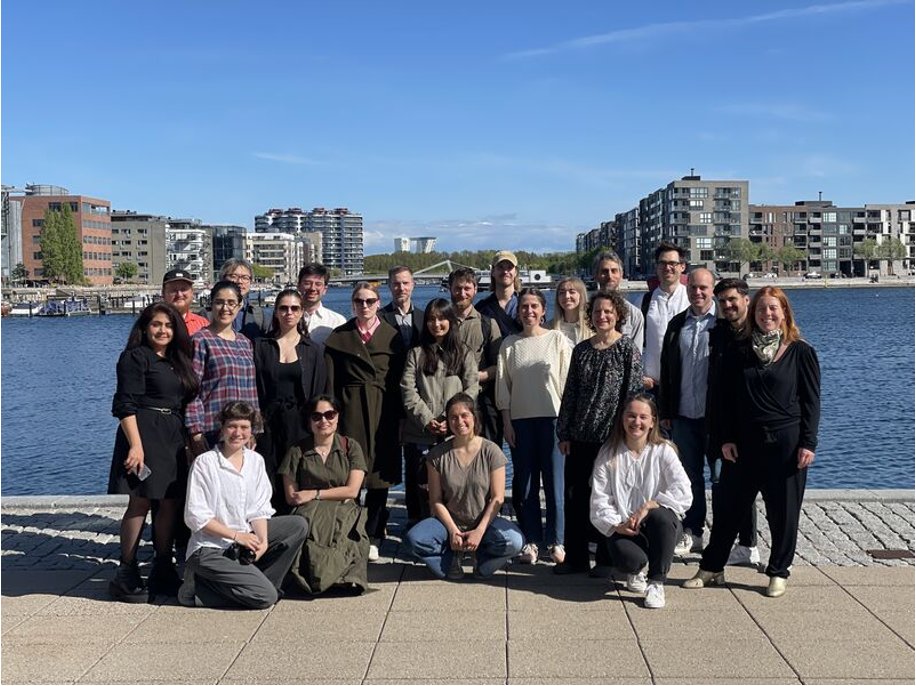
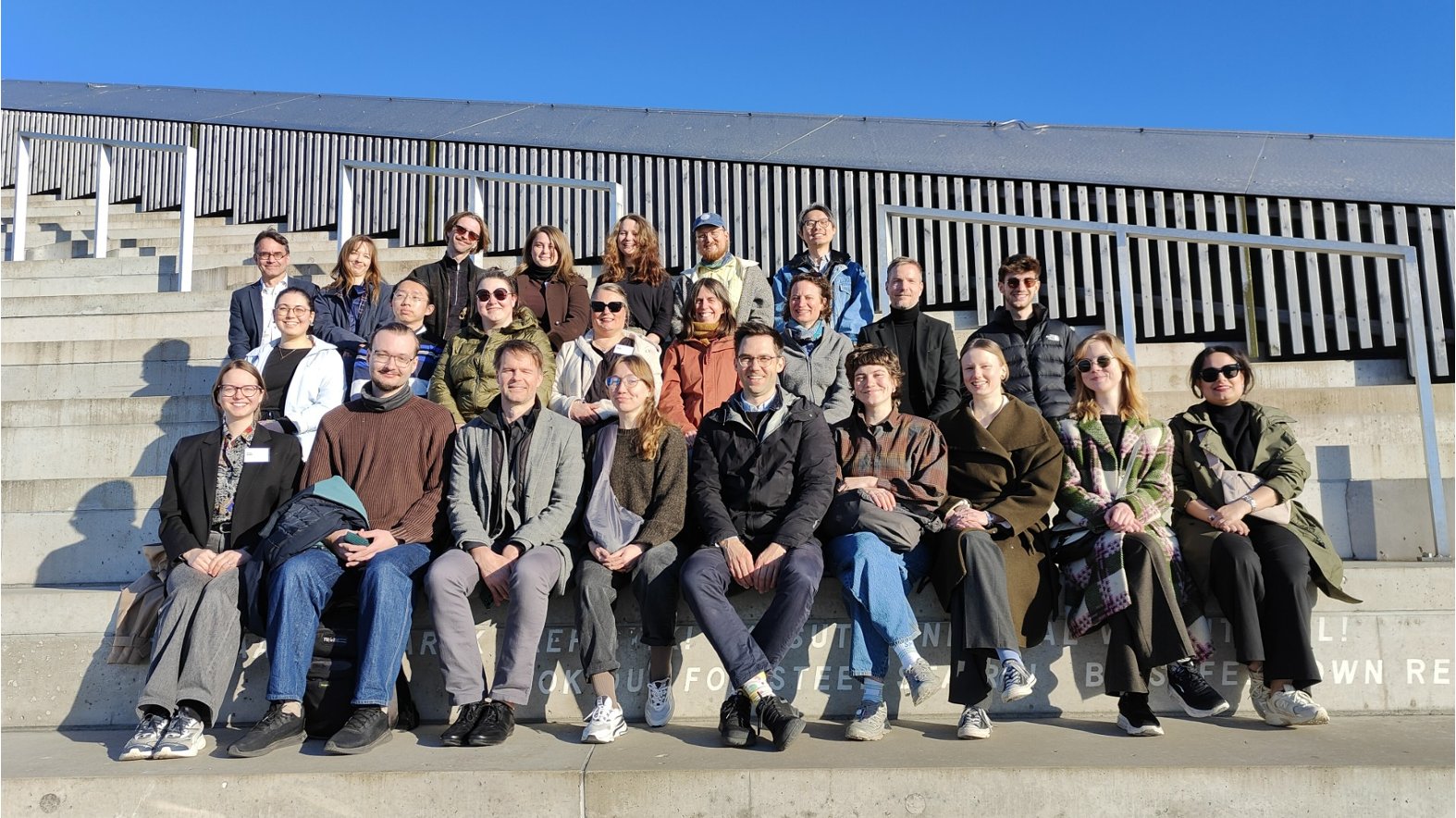
    Group photo of the participants at the 2025 forum in Copenhagen

    2024 – Espoo, Finland

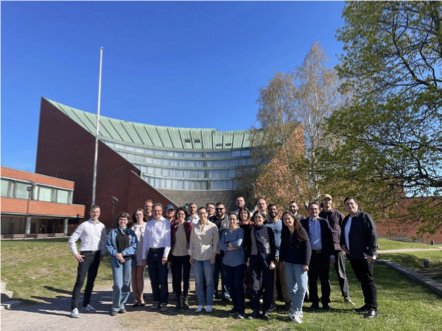
    Group photo of the participants at the 2024 forum at Aalto University

    2023 – Gothenburg, Sweden

    Group photo of the participants at the 2023 forum at Chalmers in Gothenburg

    2022 – Trondheim, Norway

    Group photo of the participants at the 2022 forum at NTNU in Trondheim
  • Interview: Reduction Roadmaps and Climate Limit-Values in Construction

    Interview: Reduction Roadmaps and Climate Limit-Values in Construction

    As the construction sector works to reduce its greenhouse gas emissions, one tool is rapidly gaining importance: limit-values that define how much climate impact new buildings are allowed to have. Across the Nordic countries, governments and industrial actors are developing their own versions of such limit-values, but they are doing so using very different methods.

    In their recent CISBAT 2025 publication, “Reduction Roadmaps: methods of determining limit-values for climate impact in construction,” PhD candidates Toivo Säwén and Anna Wöhler from our group collaborated with architects at Wingårdhs and Krook & Tjäder, as well as researcher Ida Karlsson from the Department of Space, Earth and Environment.

    The study reviews 14 initiatives across Sweden, Denmark, Finland, and Norway and identifies 27 methodological choices that shape how climate limits are set. It highlights a strong divide between bottom-up, technology-based approaches and top-down, climate-budget-based approaches and discusses why a hybrid method may be needed to meet long-term climate goals.

    We spoke with Toivo to learn more about this work, its findings, and its implications for future climate regulation in the construction industry.

    What motivated the study? Your paper shows that many countries and organisations are now defining “limit-values” for the climate impact of new buildings, but using very different methods. Why is this a challenge for the construction sector?

    The time to act in response to the climate emergency is now, and the construction industry has a great responsibility to act, both in Europe and worldwide. National and transnational regulations like limit-values play an important role here to ensure a level playing field for actors in the construction industry. Basically, these limit-values ensure that there can’t be economic benefits to delaying the transition to less climate intensive practices in the built environment. What we see now is that these regulations are developing in very different ways, both in different countries, and on a EU level. First of all, this means a lot of parallel efforts that could be avoided if joint methods were developed. Secondly, it makes comparisons between countries difficult, raising questions about the fairness of the regulations if some countries are more ambitious than others.

    You reviewed both legislative limit-values and industry-led Reduction Roadmap initiatives. What differences did you observe between these groups?

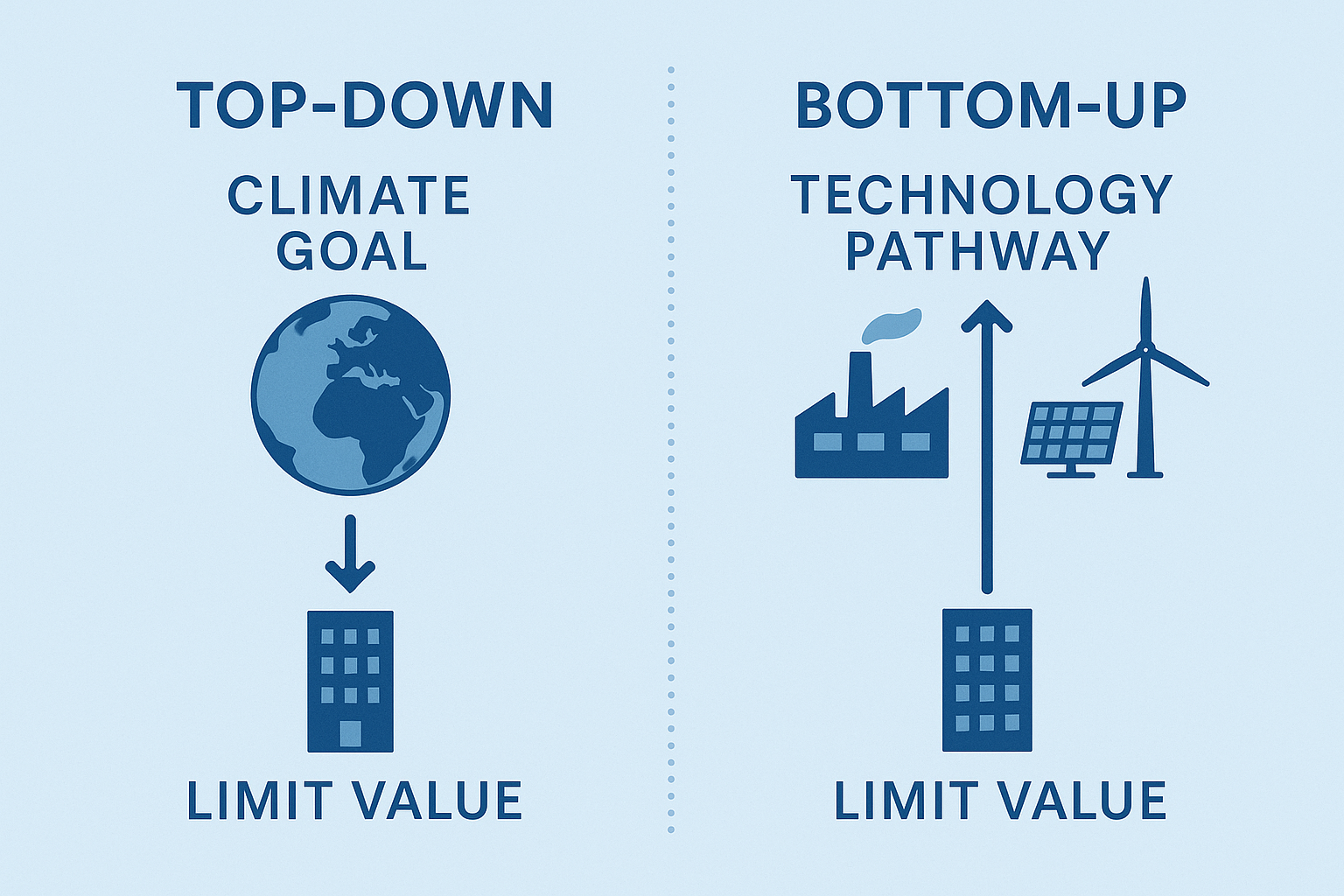
    We can highlight two differences. First off, we saw that the industry-led initiatives are generally more ambitious than the legislative, national approaches. This makes sense as the industrial initiatives often include organisations that have already come a long way and want to make sure that their investments in the transition continue to be relevant as regulations evolve. Secondly, we see that industrial initiatives are much more likely to consider a carbon budget perspective, whereas the national initiatives mostly focus on incremental improvements based on currently available technologies. This is what we refer to as the difference between top-down and bottom-up approaches – top-down means defining carbon budgets that take planetary boundaries into account, while bottom-up means focussing on currently available technologies. Our main message is that a balance between both is needed for limit-values to be accepted by actors, while being effective in combating the climate emergency.

    Among the 14 Nordic initiatives you analysed, were there any examples that stood out, either for being especially ambitious or especially conservative?

    Well, we see different processes in different countries. For instance, Denmark has very rapidly introduced limit-values for new construction, whereas Sweden has introduced mandatory climate declarations without setting limits. This means industrial initiatives in Denmark have focussed on campaigning for appropriate legislative limit-values, whereas industrial actors in Sweden have instead self-organised, committing to lower impacts without having to wait for the introduction of legislation. The large scale effect of these different approaches remains to be investigated. We can see that the transition in Denmark is happening on an industry-wide level, whereas in Sweden it is spearheaded by certain more ambitious organisations while others have largely continued business-as-usual.

    A core finding of your work is the divide between bottom-up (technology-based) and top-down (climate-budget-based) approaches. Why do these two approaches generate such different limit-values for the same type of building?

    The harsh reality is that the carbon budgets available to remain in line with the Paris agreement, limiting global warming to 1.5 degrees Celsius, are rapidly running out. This means the top-down, climate-budget based approaches that are in line with the Paris agreement are really restrictive. Meanwhile, purely bottom-up approaches can aim for a gradual reduction over the upcoming decades that emphasises minimising or eliminating negative economic impacts. The chosen course is of course in the hands of democratic political processes, but these decisions need to be taken based on transparent information from the scientific community. That is why we are arguing for taking into account both bottom-up and top-down approaches to understanding limit-values, so that decision-making can be informed both by the social, economical consequences, and the consequences for the global environment.

    The paper recommends hybrid approaches to bridge the gap between technological feasibility and climate science. What could a practical “hybrid” method look like in the Nordic context?

    The key idea we are proposing for practical implementation is that methods exist for benchmarking proposed approaches based on their alignment with carbon budgets. This means that decisions on any proposed limit-values can be taken while aware What we currently see in proposed legislation is that the climate perspective is missing, which means it is impossible for decision-makers to know if the legislation will actually be effective in contributing to meeting climate goals. So the hybrid approach means developing alternatives for limit-values that have acceptance among industry actors, and then benchmarking those alternatives based on carbon budgets so that the environmental consequences are made clear when a decision on what legislation to introduce is made.

    You note that even ambitious limit-values may not be sufficient without reducing overall construction rates and making better use of existing buildings. How should this insight influence climate strategies in the construction sector?

    Most limit-value proposals currently in place set limits for emissions per square metre. This can lead to some very strange conclusions, for instance it can often be easier to reach limit-values for a larger building as impact from the most climate-intensive building components are spread out over a larger area. We also know that the least climate-intensive building is the one that is never built. Limit-values per square metre can’t affect whether a building is needed or not. This means limit-values need to be accompanied by better legislative opportunities to make sure that construction efforts are prioritised based on societal needs, not only based on economic considerations.

    Finally, what do you hope policymakers and industry actors take away from your study?

    Our main idea is that bottom-up, technology-based approaches can coexist with top-down, climate-based approaches. By applying multiple perspectives, decision-making can be scientifically informed. We also want to point to the great amount of work being done to develop robust limit-values, and urge policymakers and organisations to learn from approaches in other regions and nations, so that the climate transition of the built environment can be an arena for collaboration rather than competition.

    The Reduction Roadmaps study provides a comparison of how climate limit-values for buildings are currently being developed across the Nordic region. By revealing the many methodological choices behind these values and the significant differences they can produce, the work lays a foundation for more harmonised, transparent, and scientifically grounded climate regulation in construction.

    We thank Toivo Säwén for sharing insights from this collaboration, and we look forward to seeing how this research continues to support the transition toward a low-carbon built environment.

    Read more

    • CISBAT Conference paper by Toivo and Anna: Link to paper
    • Interview by Chalmers department of Architecture and Civil Engineering – Toivo and Anna on the Reduction Roadmap: Link to article
  • Pragmatism in Practice – Interview with Sjouke Beemsterboer

    Sjouke Beemsterboer discusses his PhD journey with us in this interview – research on life cycle assessment (LCA) in the Swedish building sector, and advice for future researchers. Sjouke shares his insights on balancing scientific credibility with practical utility, and the evolving landscape of sustainable building.

    Congratulations on your PhD! Could you briefly tell us what your dissertation was about, in your own words?

    The PhD explores how environmental life cycle assessment (LCA) is used in Swedish building companies and building projects between 2017 and 2025. The studies dive into how LCA methods can be simplified, how effective they are in product development, and how companies use LCA in response to legal requirements for building climate declarations. The findings show that LCA is not just about following strict rules—it’s also about making smart adjustments to fit different goals and situations. By taking a pragmatic approach, my thesis highlights how such adjustments in LCA can be both valid and valuable, helping researchers and practitioners better understand and respond to the real-world challenges of sustainable building.

    What drew you to study how life cycle assessment (LCA) is actually used in building companies, rather than focusing only on the technical side of methods and tools?

    At first, the focus on LCA practices in building companies was developed because of ab growing interest by building companies to learn how to use LCA. Hence, the focus in the licentiate thesis had been on simplification practices. Later on, the research continued to look at LCA practices in industry because it became evident that the reality of such LCA work frequently looked different from how it is portrayed in the scientific literature.

    One of the key themes in your dissertation is the balance between scientific credibility and practical utility in LCA. What did you learn about how practitioners navigate this tension?

    That is a good question. There are different ways in which practitioners aim to safeguard the credibility of their work. For example, by adhering to established standards, using credible software tools and data sources, as well as by moving towards more comprehensive assessments. At the same time, it is clear that LCA practitioners in many situations adapt LCA work to make it useful in building projects and other practical settings. This can be, for example, by excluding parts of the building life cycle, using LCA results that are available from other projects, or by prioritising LCA-based activities over assessment outcomes. As the thesis makes clear, the particular way in which practitioners balance credibility and practical utility is highly context dependent, related to the purposes that people have for LCA.

    During your PhD, how has the landscape of LCA in the Swedish building industry changed (such as the klimatdeklaration for new buildings)? How do you think these changes have shifted the balance between scientific credibility and pragmatic use of LCA over the years?

    The introduction of building climate declarations has been a game changer for LCA-based climate calculations in the building sector. Where at the beginning of my PhD, LCA was only used sporadically by companies to assess building climate impacts, it has now become a routine practice in building projects. With time, I have seen that different practical uses of LCA have developed, with LCA-based climate calculations leading more often to changes in the building design, as well as the relations between clients, developers, contractors, and suppliers. In that sense, I would say that practical utility has certainly not become less important.

    You argue for a pragmatic philosophy of LCA. What does this mean in practice, and how does it differ from the traditional way researchers view LCA?

    Pragmatism is a purpose-oriented philosophy, where the value of knowledge lies with the practically conceivable effects on action, rather than with how closely knowledge represents reality. A pragmatic philosophy of LCA challenges the more traditional view that LCA revolves around accuracy, completeness, and other expressions of scientific rigour. By adopting a pragmatic philosophy in LCA, the attention moves towards what LCA actually contributes with in terms of understanding and addressing product environmental impacts. Now, to be clear, my thesis does not claim that scientific rigour is unimportant, but instead that it should be more explicitly balanced with concerns for practical utility. I view pragmatism as a resource to help achieve such balance.

    What do you think researchers can learn from practitioners when it comes to making sustainability methods more useful in practice?

    In line with what I have said before, I believe it is important for researchers to understand that aiming for accurate and complete LCA knowledge is in itself not always the best strategy. I believe researchers can learn from LCA practitioners in industry to pay more attention to the practical context of applications and the goals and logics of different stakeholders.

    Looking back, what was the biggest challenge you faced during your PhD, and how did you overcome it?

    There have been many! One central challenge has been to continue to carry out the research with an open mind, and research how LCA was actually being used in sustainable building practices. Many of the scientific articles that I read through the years painted a picture of LCA that was very different from what I observed. It was certainly challenging to learn to see and understand the building LCA practices for what they are, rather than judging them against well-known scientific ideals. During my PhD, I have made time to read about the philosophy and sociology of science and technology. Learning how science and technology works in other areas certainly has helped to see how scientific rigour influenced LCA practices.

    Now that you’ve finished your PhD, what directions are you most excited to explore in your career?

    I am looking forward to continuing to drive LCA practices. At the moment, I am orienting myself to see whether I will do that by researching LCA practices, or whether I may myself become involved with LCA in a company or governmental organisation.

    Outside of research, what helps you recharge and stay inspired?

    Most of my time outside of research I spend looking after and playing with my two children. Adri has recently discovered football and Eldar likes to play with Duplo. Spending time with them always helps to see things in perspective, and sometimes you get to build something nice together.

    We thank Sjouke for sharing his experiences and insights. His dedication to pragmatic and impactful research continues to inspire the next generation of sustainability professionals. We look forward to seeing his future contributions to the field!

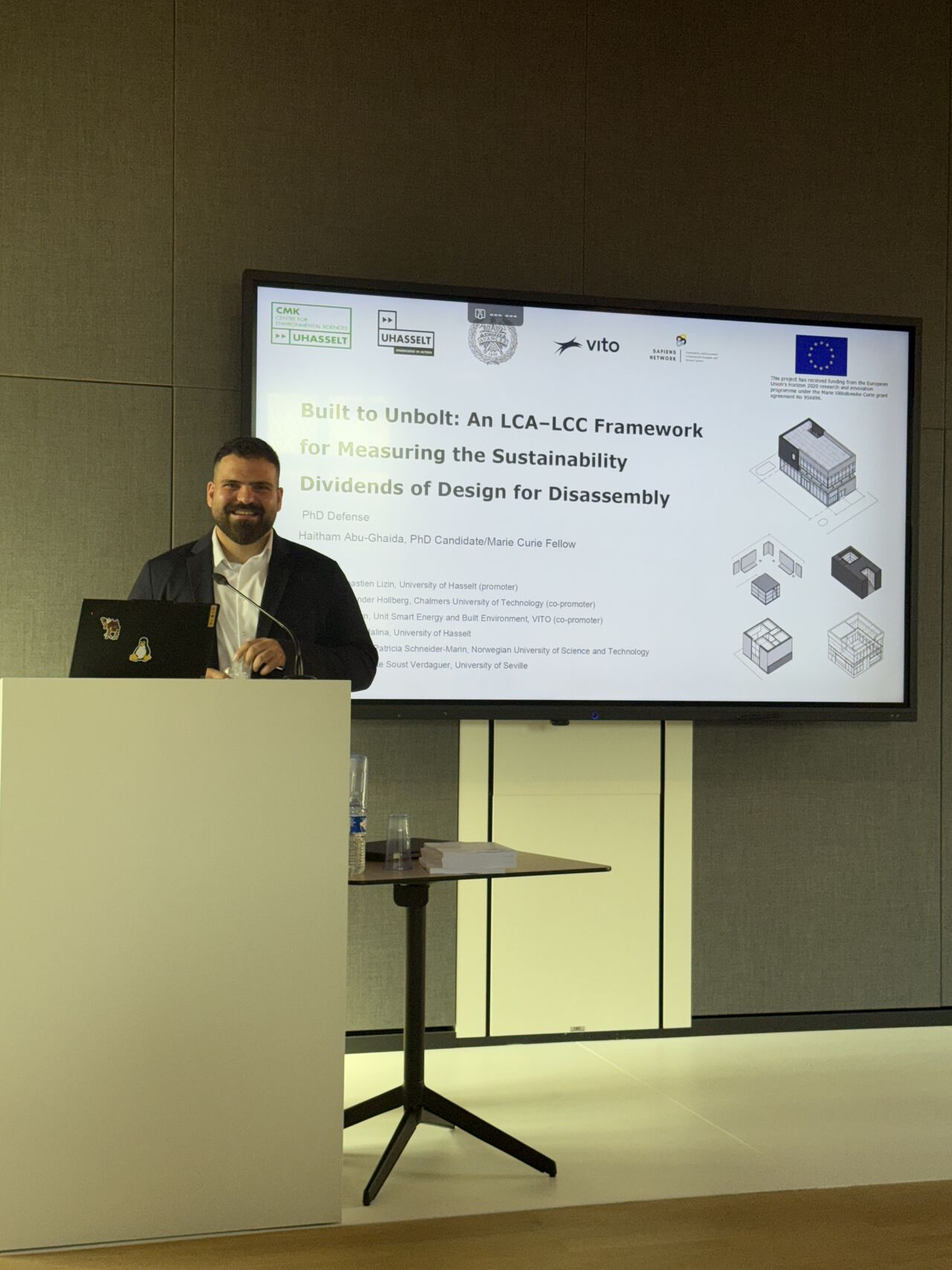
  • Interview with Haitham Abu Ghaida

    Interview with Haitham Abu Ghaida

    This week we sat down with Haitham Abu Ghaida to talk about his research journey, key insights, and advice for students interested in sustainability and the built environment.

    Could you briefly tell us what your recent work is about, in your own words?

    Built to Unbolt develops a way to fairly measure the environmental and economic benefits of design for disassembly (DfD). It does three things in one framework: (i) models the interdependencies between building components so we don’t miss collateral “cascade” impacts, (ii) switches to a time-resolved prospective LCA so future replacements are assessed with future (cleaner) background data, and (iii) adds a time-resolved, value-added LCC so costs are handled consistently with the LCA, including inflation and discounting. In whole-building tests, ignoring dependencies can hide ~30% of embodied impacts, high-disassembly variants consistently cut embodied GHG vs. business-as-usual, and the clearest economic gains come from avoiding near-term replacement cascades—not from far-future salvage credits.

    What inspired you to study this topic, and why it matters?

    I came to design for disassembly from a “right-to-repair” mindset. I’ve always fixed phones and laptops, upgraded old machines, and hacked together Raspberry Pi/Arduino projects and DIY servers from retired hardware. That hands-on world teaches you the value of modularity and access: if you can open it, you can maintain it, upgrade it, or reuse it. Buildings aren’t so different. DfD applies the same logic at architectural scale—designing layers, connections, and interfaces so components can be replaced without collateral damage and materials can circulate at high value. That’s why it matters for sustainability: it turns buildings from future waste into long-lived, serviceable systems and material banks.

    What are the most surprising or important insights from your research?

    Dependencies matter. Traditional LCAs underestimate embodied GHG by up to ~28% when they ignore component interdependencies and the cascading removals they trigger. In the same studies, high-disassembly variants achieved up to ~46% lower embodied GHG than low-disassembly ones.

    Time matters. Switching from static to time-resolved prospective LCA shows static LCA can overestimate embodied GHG by up to ~32% (it freezes today’s background data while supply chains decarbonize). Yet the ranking holds: high-disassembly designs still win across scenarios.

    Economics, aligned with LCA. The time-resolved value-added LCC reveals where savings really come from: preventing secondary (cascade) replacements, deferring primary replacements beyond the study horizon, and trimming material intensity up-front—not from residual value decades away (discounting shrinks those to near-zero). In a façade case, the disassemblable ventilated panel had the lowest net-present cost and the smallest cascade exposure.

    How does time-resolved (prospective) LCA change our thinking?

    It corrects two biases of static LCA: (1) inflated replacement burdens (because future manufacturing/energy are cleaner) and (2) exaggerated Module D credits (avoiding future cleaner virgin production yields smaller credits). Despite this, DfD’s advantage persists: in the ZEB case study (BAU vs. HDP vs. LDP), the high-disassembly design reduced embodied GHG ~12–25% versus BAU across SSP1–SSP5 pathways (excluding Module D).

    Your work uses multiple methods and collaborations. What was it like working across disciplines and with partners?

    The framework integrates LCA, LCC, and design for disassembly logic, and it’s been developed with input from architects, engineers, and researchers in building physics and circular construction. Collaborations enabled access to detailed building models and real maintenance/replacement data, which were crucial to map dependency networks and test whole-building cases.

    How can your findings be useful for households, local governments, or companies?

    For building clients and designers: prioritize high-disassembly details where dependency cascades are largest (façades, services, interior finishes). Use time-resolved scenarios to stress-test decisions rather than single-point static LCAs.

    For local governments and housing providers: support deconstruction pilots and documentation (material passports) to build evidence on recovery without collateral damage; align procurement with disassembly criteria.

    For companies: develop products with accessible fasteners and replaceable layers; offer service models that monetize avoided cascade replacements rather than distant salvage value.

    What was the biggest challenge you faced, and how did you overcome it?

    Balancing methodological depth with decision relevance. I tackled it by prototyping small (component/assembly level), iterating fast to whole-building cases, and co-developing with practitioners so the outputs answered real procurement and design questions.

    What directions are you excited to explore next?

    Moving to Gothenburg as a postdoc, I’m keen to:

    (i) gather field evidence for disassembly networks in real deconstruction projects,

    (ii) refine spatially/time-resolved inventories to capture regional decarbonization lags,

    (iii) embed risk and option value in time-resolved LCC, and

    (iv) integrate with digital tools—BIM-based extraction/visualization of disassembly networks and material passports.

    What advice would you give to students or PhD candidates in this area?

    Start with the problem, not the method. Pick a real decision and let that drive methods. Mix methods (LCA, costing, flows) with design research and field observation. Prototype small and iterate fast. Be honest about uncertainty—use scenarios and report ranges. Design for reuse of your work (clean code, clear assumptions, versioned data). Engage practitioners; site visits beat perfect models. Communicate visually—layers, connections, and flows. And take care of yourself: mentors, peers, and pacing matter.

    Outside of research, what helps you recharge?

    Looking forward to Gothenburg’s archipelago and fika. I’ll miss the UHasselt team, the ease of a compact city, and quiet bike rides in Hasselt.

    We thank Haitham for sharing his experience and insights. We look forward to seeing his future contributions to the field.

  • Interview with Toivo on his research visit at SEED, KTH

    Interview with Toivo on his research visit at SEED, KTH

    We sat down with Toivo to speak about his recent research visit at SEED, KTH. His work focuses on bridging the gap between building-level LCA approaches and the strategic environmental work needed at the city and regional levels. In this interview, Toivo shares what inspired his visit, key insights from collaborating with experts in environmental issues, and the challenges he encountered along the way.

    What inspired you to pursue a research visit at SEED, KTH, and how does it complement your work at Chalmers?

    I became acquainted with researchers at KTH through annual PhD forums organized by professors in the LCA field. The KTH research group has considerable experience supporting governmental bodies working on environmental issues and has a specific focus on renovation instead of new construction—a focus I felt was missing in my previous research.

    What key insights did you gain from your collaboration with the SEED, KTH team?

    A key reflection is that while LCA approaches can be beneficial at the building level and climate budgets are useful on a global/national level, the missing link is in between—to support cities and regions in their strategic environmental work. What kind of tools are needed?

    How has your experience influenced your perspective on sustainable built environments, particularly regarding renovation projects?

    I have learned that renovation projects are very challenging and socially entangled, requiring a much more project-specific approach to be successful than new construction.

    Were there any unexpected challenges during your visit, and how did you overcome them?

    My initial plan was to finalize a research paper during the visit; however, progress was slow because I didn’t feel I had the theoretical knowledge to fully support the work. I overcame this by spending a lot of time in the excellent KTH library and ensuring I had a comprehensive overview of the literature instead of rushing to complete the paper.

    What aspects of the research culture at SEED, KTH would you like to integrate into your work at Chalmers?

    All staff—from research assistants to professors—participated in informal events to exchange ideas and get to know each other better, fostering very good social networks and a strong, positive culture.