Project status: Ongoing

  • BUD-MI

    Project overview

    Mapping construction material stocks is essential for understanding socioeconomic metabolism and informing the circular economy. However, spatial material stock studies often produce coarse results owing to challenges in material intensity development. This project develops BUD-MI (Bottom-Up Data: Material Intensity), a material intensity data collection template designed with three core objectives: streamlining the data collection process during building sampling, supporting cumulative research while ensuring project-specific relevance, and enhancing the utility of results for the construction industry. BUD-MI aims to assist researchers, students, and construction practitioners in developing material intensity data in line with these three objectives. The development process requires identifying material intensity challenges, eliciting requirements, mapping relevant domain work and creating missing ones, and assembling them all into BUD-MI. BUD-MI supports future material intensity data collection efforts, ensuring data quality, granularity, comparability, transferability, and availability, thereby advancing socioeconomic metabolism and circular economy research and practice.
  • INDIMASS

    Project overview

    The aim of this project is, within a doctoral research project, to further develop, verify, and test a tool, including indicators and key performance indicators (KPIs), developed as part of a preliminary study. These indicators and KPIs are intended to be used to set requirements and provide incentives in the Swedish Transport Administration’s procurement processes, with the aim of improving surplus material management by making it more circular, both in the planning and design of projects and in their implementation and reporting.

    The work has the following sub-objectives:

    1. To further develop the prototype into a functional tool, and to test and prepare it for implementation for reporting on surplus material management in the Swedish Transport Administration’s projects based on specific indicators and KPIs.
    2. To expand the prototype to include socio-economic and sustainability-related indicators and KPIs.
    3. To develop an additional functional tool that addresses indicators and KPIs relevant at the societal level.
    4. To evaluate the socio-economic effects of surplus material management at both the project and societal levels.
    5. To evaluate how requests for tenders can be designed to steer surplus material management in the desired direction.

    The project is expected to generate increased knowledge of sustainable and circular surplus material management, encompassing environmental, social, and economic aspects. The resource accounting tool, including indicators and KPIs at the project level, will enable standardized project reporting and consistent follow-up. Together with the expanded tool, the study will contribute to a better understanding of the socio-economic effects of surplus material management and how tendering models can be designed to steer material management in projects in the desired direction.

  • Circular Business Models in Construction

    Project overview

    In construction, supply chains are highly fragmented and project-based, making coordination difficult. Circular business models are being implemented to improve sustainability and increase resilience. These include collecting used products and materials, transporting them, storing them, inspecting their quality, and redistributing them. However, these processes are often costly and logistically complex, particularly when materials originate from multiple locations and projects. Consequently, the implementation of circular business models remains limited.

    Understanding how to provide efficient and sustainable transport within circular business models is an important research challenge, particularly in industries where material flows, actor networks, and institutional arrangements are highly interconnected. The aim of this project is to investigate efficient and sustainable transport solutions for circular business models. This collaborative project combines two distinct research fields: supply chain management (Lisa Govik, TME) and circularity in the built environment (Maud Lanau, ACE).

    The project will (1) ) contribute to knowledge on the interplay between transport decisions and circular business models, and (2) shed light on balancing efficiency and sustainability in transport within complex supply chains. The project is expected to result in two publications in top-tier journals. It will also provide a foundation for the research team to develop future research ideas and build a consortium with key external stakeholders, who will serve as partners in future applications for external funding. This collaborative initiative will open a new avenue in sustainable transport research, with a particular focus on circular business models in complex and temporary supply chains.

  • NaviGateAI

    Project overview

    NaviGateAI develops and field-validates an interoperable real-time decision support platform that strengthens situational awareness in emergency response. The project delivers a TRL 7 MVP that fuses drone video, wearable and helmet sensors, thermal and visual streams, IMU, and a priori building and geospatial data into a continuously updated 3D operational picture with prioritized, explainable recommendations for incident command, supporting fast “how”, “why”, and “what-if” queries.

  • ACE Mixed Reality Studio

    ACE Mixed Reality Studio

    About

    Complex urban simulations are often difficult to discuss collectively. Results live on individual screens, in reports, or in digital presentations, making shared immersive interpretation challenging.

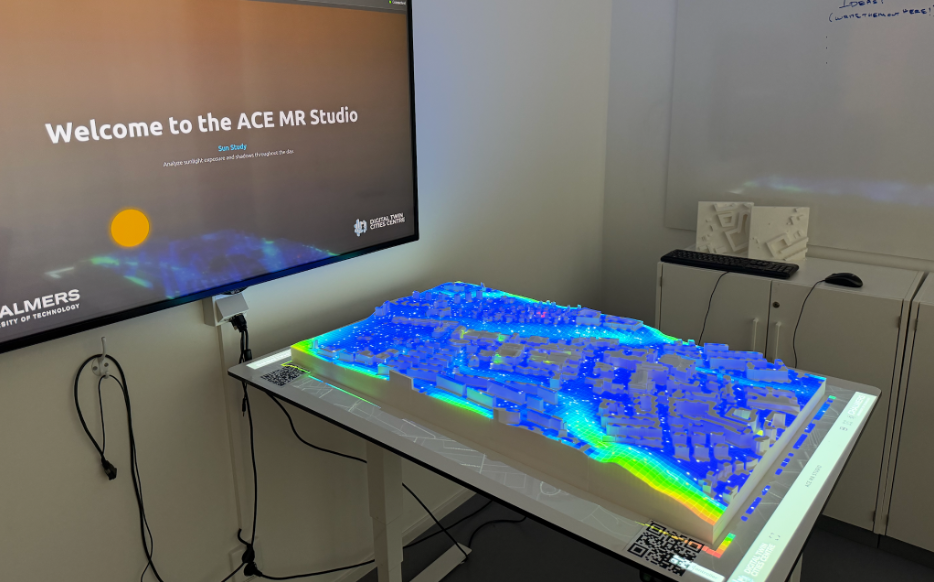
    The Research Area Sustainable Built Environments (SBE) at Chalmers developed the ACE Mixed Reality Studio to address this problem. The studio combines a physical model of the Chalmers Campus with Mixed Reality visualisation workflows to develop, test and support collaborative analysis and decision-making.

    Contact

    For research collaborations, please reach out to Alexander Hollberg (PI) or Sanjay Somanath (lead developer).

    For commercial enquiries, please reach out to Elena Malakhatka at Chalmers Next Labs.

  • Nordic Built Environment LCA PhD forum

    Nordic Built Environment LCA PhD forum

    The Nordic Built Environment LCA PhD forum is organised by a collaboration between universities in the Nordic countries, including the Baltic states. It is purely the researchers’ own initiative.

    Logos of NTNU, Chalmers, Aalborg University, KTH and Aalto University

    Next forum: 2027

    Dates (preliminary): 13–14 May 2027

    Place (preliminary): University of Iceland

    Host: Jukka Taneli Heinonen, heinonen@hi.is

    Call for abstracts: coming in January 2027

    Past forums

    2026 – Tallinn, Estonia

    • 7–8 May 2026
    • Tallinn University of Technology (TalTech)
    • Host: Kimmo Sakari Lylykangas

    2025 – Copenhagen, Denmark

    • 6–7 May 2025
    • Aalborg University (Copenhagen campus)
    • Host: Kai Kanafani, kak@build.aau.dk
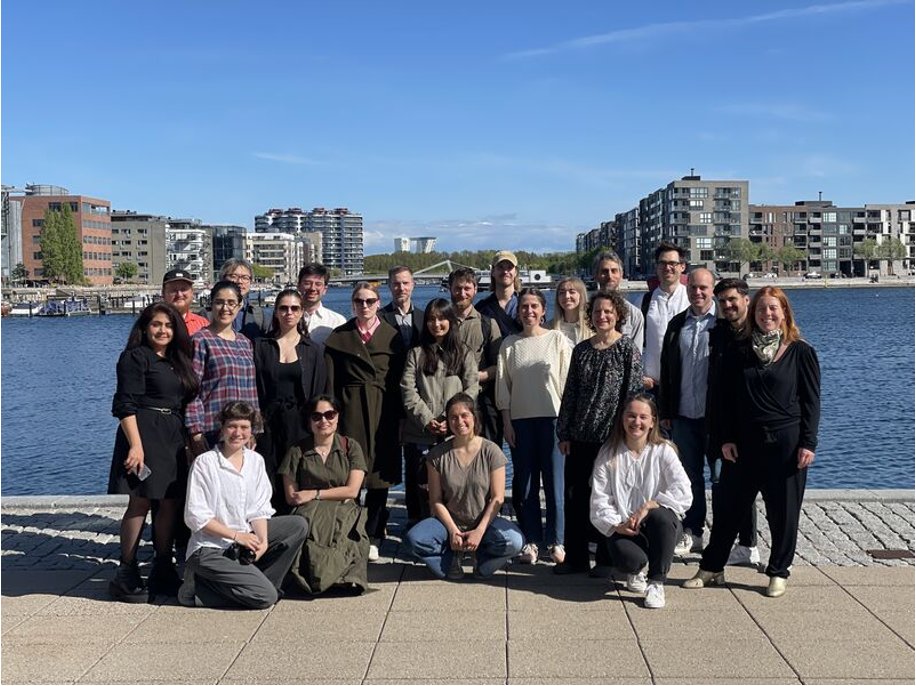
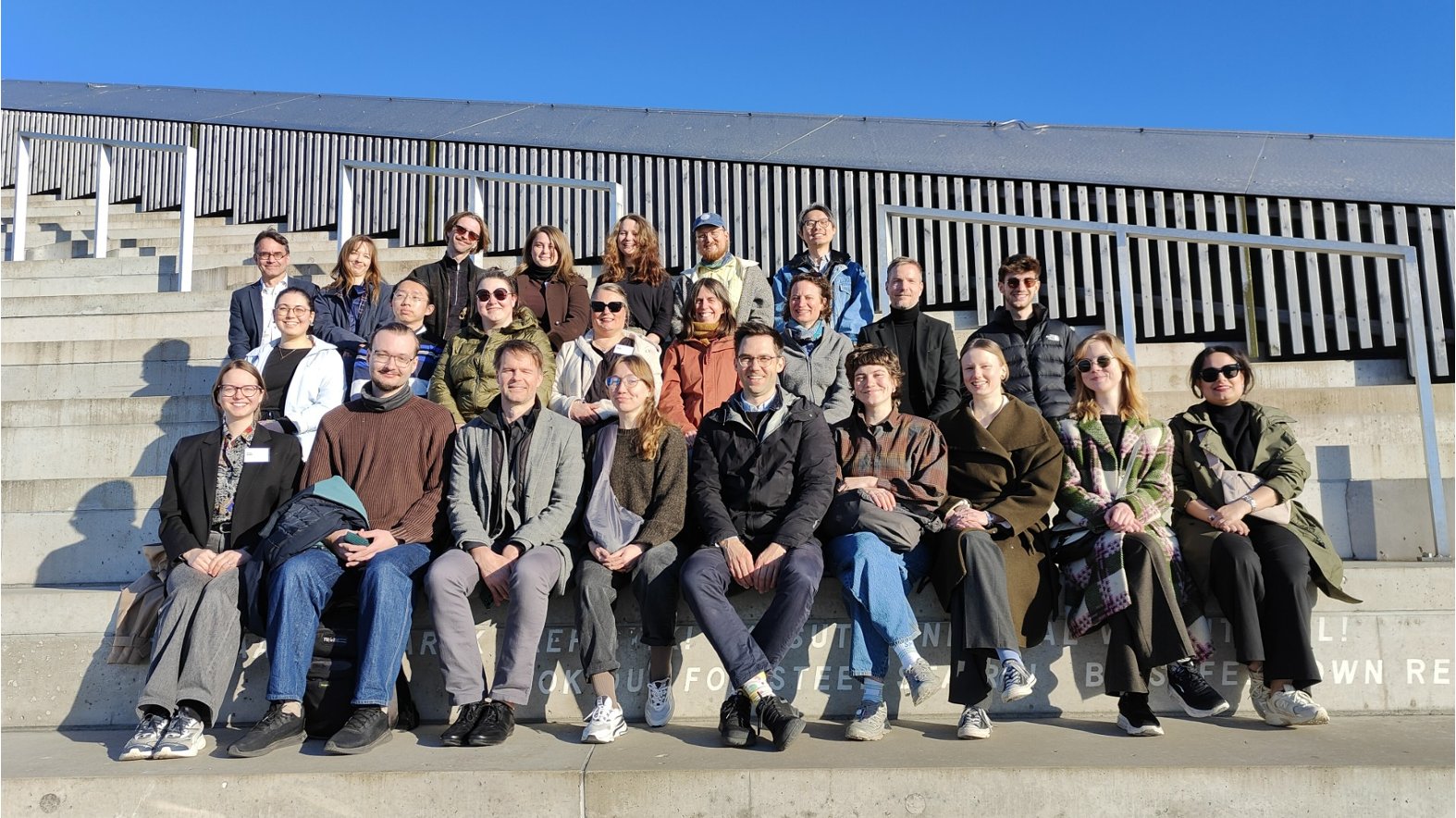
    Group photo of the participants at the 2025 forum in Copenhagen

    2024 – Espoo, Finland

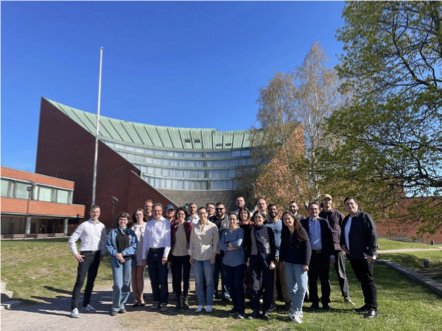
    Group photo of the participants at the 2024 forum at Aalto University

    2023 – Gothenburg, Sweden

    Group photo of the participants at the 2023 forum at Chalmers in Gothenburg

    2022 – Trondheim, Norway

    Group photo of the participants at the 2022 forum at NTNU in Trondheim
  • Digital material inventories for sustainable urban mining

    Digital material inventories for sustainable urban mining

    Project overview

    The main goal of this project is to develop a method supporting reuse and recycling of urban construction materials based on digital twins to save greenhouse gas emissions. Cities are responsible for 70% of greenhouse gas emissions and 80% of resource consumption. Especially, for construction materials, there is a high potential for circular economy (CE) strategies and urban mining. To enable this urban mining of construction materials, a detailed inventory of the material stock is needed. Current modelling approaches use a few representative sample projects and extrapolate the data to the city level. However, to be able to reuse materials and components, it needs to be known where they are, when they will be available, and in what condition they are. Such a detailed inventory does not exist today. The project addresses this lack by using of the concept of an urban digital twin (UDT). The information about the materials will be collected using a unique combination of remote sensing, computer vision, and statistical approaches. Using novel detailed material libraries and machine learning, the information will be added to the UDT. Furthermore, the method of Life Cycle Assessment is developed further to allow for dynamic assessment of the environmental impact of different CE strategies considering the uncertainties. Finally, the methods will be implemented in a prototype tool and tested with stakeholders in two real world case studies as a basis for further utilisation.

  • Users’ impact on domestic energy consumption

    Users’ impact on domestic energy consumption

    Project overview

    The goal of this project is to improve the understanding of the impact of users on domestic energy use by conducting a pilot study in the HSB Living Lab. The aim is to develop a methodology to study the impact of occupants’ physiological and behavioural responses on their home’s energy use. The objectives of the project are to develop and test a questionnaire to collect information on occupants’ perceived behaviours and responses to the indoor environment (use of thermostats, windows, other HVAC controls); to test non-intrusive methods (e.g. wearable sensors) of occupants’ physiological, psychological and behavioural responses to thermal stimuli; to analyse the impact of occupants on energy consumption through comparison of the occupant data (questionnaire responses and wearable sensor data) with the homes’ indoor climate and energy data collected in the HSB Living Lab; and to explore the possible reasons of user behaviour to the thermal environment from the physiological and psychological aspects.

  • Exploring the material stock – urban form nexus for urban sustainability

    Exploring the material stock – urban form nexus for urban sustainability

    Project overview

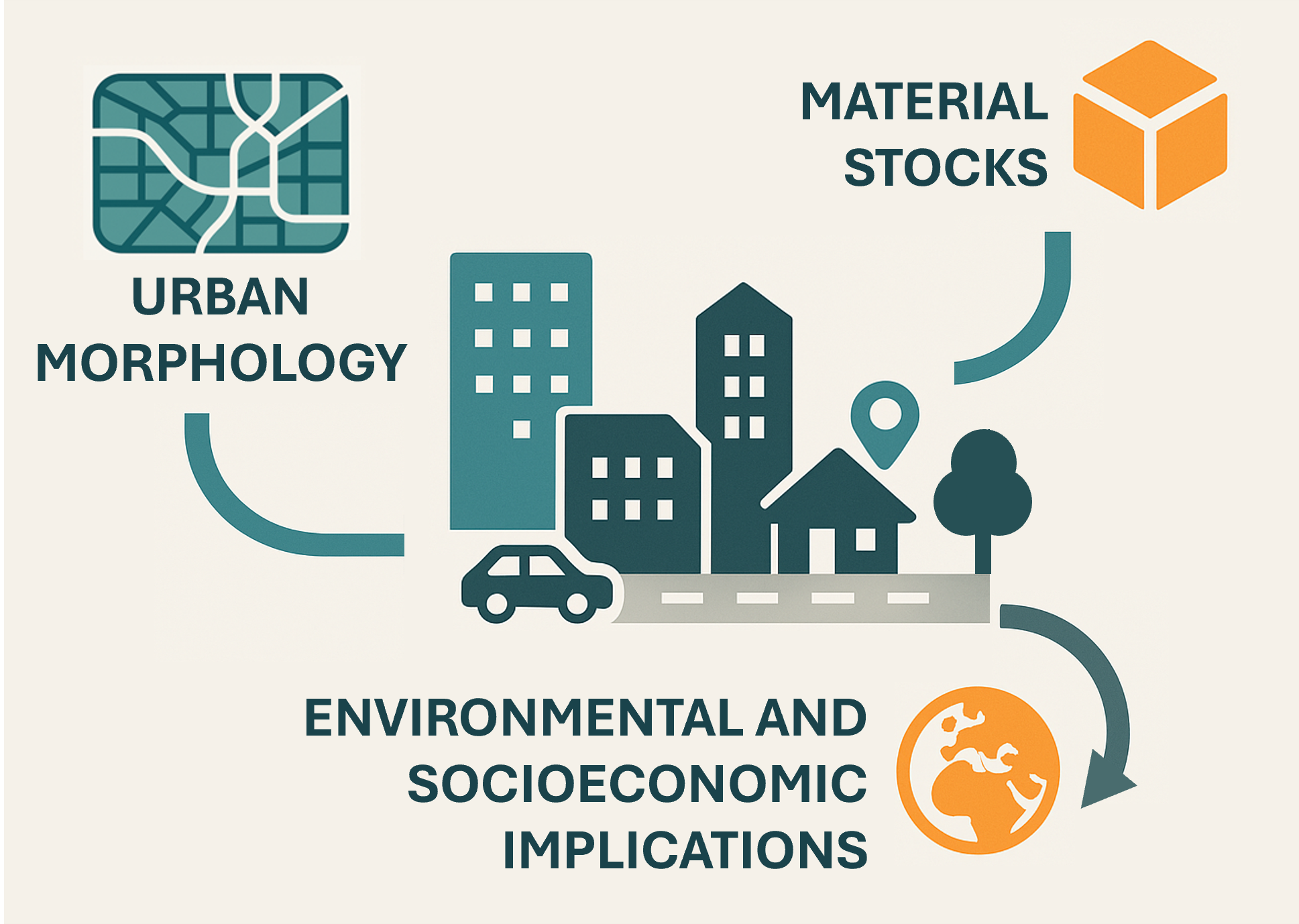
    As the built environment continuously grows, so does the accumulation of materials in buildings and infrastructures. This has dramatic environmental impacts: resource extraction and waste generation are ever-increasing, and the transformation of resources into buildings and infrastructures stands for 11% of global carbon emissions. A better understanding of the role that urban planning – more specifically urban morphology – plays on the type and quantity of materials accumulated in the built environment is key to minimize environmental impacts linked to urban development. At the same time, the built environment should be developed so that it provides its intended functions that contribute to human well-being. This project uses a systems perspective to include, understand, and analyze interrelations between built environment material stocks, morphological types (e.g., buildings, roads), their spatial characteristics, the function they provide (e.g., shelter, transport), and socioeconomic and environmental implications of different urban forms. At the core of this project is the integration of two disciplines with a strong systems perspective tradition: built environment stock modeling and urban morphology.

  • EqualHouse

    EqualHouse

    Project overview

    EqualHouse aims to identify, analyse and tackle the most significant dimensions of housing inequality across Europe. Designed with both transdisciplinary and interdisciplinary elements, EqualHouse will provide housing policymakers and other key stakeholders with robust, evidence-based guidance on how to address these inequalities in a sustainable, inclusive and affordable way. The project involves a consortium of 12 project partners from around Europe and is funded by the 2023 EU Horizon programme.

    Chalmers University of Technology will provide expertise in tackling energy poverty and unsustainable housing. Emiline Elangovan, a PhD student part of the Sustainable Building research group, will work closely with EqualHouse in her doctoral research with the support of Holger Wallbaum (project lead Chalmers and co-supervisor) and Liane Thuvander (main supervisor).

    Project partners

    • Charokopeio Panepistimio (Greece)
    • Comite Europeen De Coordination De L’habitat Social AISBL (Belgium)
    • Federation Europeenne D’associations Nationales Travillant Avec Les Sans-Abri (Belgium)
    • International Union of Tenants (Sweden)
    • Just Cities (Netherlands)
    • University College Dublin (Ireland)
    • University of Glasgow (United Kingdom)
    • Katholieke Universiteit Leuven (Belgium)
    • Perfieria Kozpolitikai Es Kutatokozpont KFT (Hungary)
    • Tilburg University (Netherlands)
    • Uniwersytet Warszawski (Poland)

    Funder: EU Horizon 2023 research and innovation programme, grant agreement no. 101132325