Student assistants are an integral part of the Sustainable Built Environments research area. Currently completing their Master’s degrees, Johan Blomsterberg, Djamila Mamedova, and Arvid Hall support our research in energy-efficient building renovation, data management, and spatial data visualisation.
We sat down to talk to Johan, Djamila and Arvid about their backgrounds and the specific projects they are working on.
Johan Blomsterberg
Johan joined the research group with prior industry experience in green building certification and life cycle assessments. He is currently working on integrating these concepts into the ongoing research at Chalmers to develop building archetypes for energy- and climate-aware renovation planning.
What were you doing before joining the research group?
Johan: “I recently completed an internship in London where I worked on future-proofing assets through green building certification, net-zero carbon strategies, energy optimisation, and life cycle assessments (LCA).”
How did that practical experience lead you to Sustainable Built Environments at Chalmers?
Johan: “When I returned to Sweden to complete my master’s studies, I realised that joining the Sustainable Built Environments research area at Chalmers would allow me to build on this practical experience within an academic setting.”
What are you hoping to achieve during your time here?
Johan: “It offered a valuable opportunity to further develop and apply my knowledge, particularly in optimizing asset management workflows from a research-driven perspective.”
Djamila Mamedova
Djamila works alongside Johan on the project Renovation strategy support for building portfolios from a life cycle perspective based on machine learning.
What sparked your interest in joining the research area?
Djamila: “I’ve been curious about research, especially when it relates to sustainability.”
How does working with this research connect to your wider education?
Djamila: “Collecting and understanding data to develop systems and solutions for the built environment feels tangible, and it directly connects to what I’m learning in my studies. I’ve already learned a lot.”
Could you describe the main focus of your current project?
Djamila: “The project focuses on surveying existing building stock and developing a system to evaluate renovation strategies for optimising building performance at scale.”
What is the ultimate aim of developing this evaluation system?
Djamila: “The long term goal is to integrate machine learning to support data driven decision making, enabling more efficient, sustainable renovations with significant impact on energy use and environmental performance.”
Arvid Hall
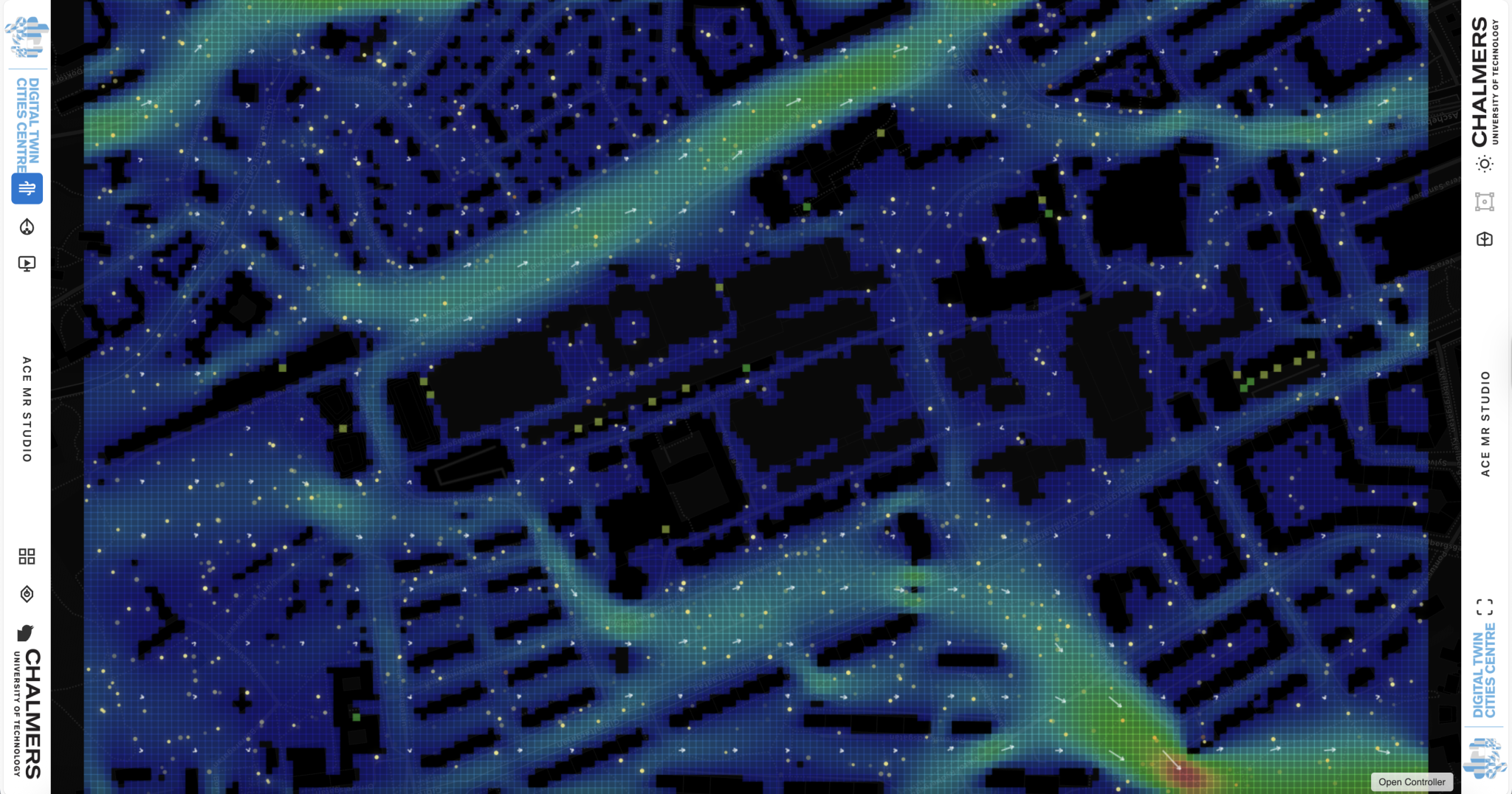
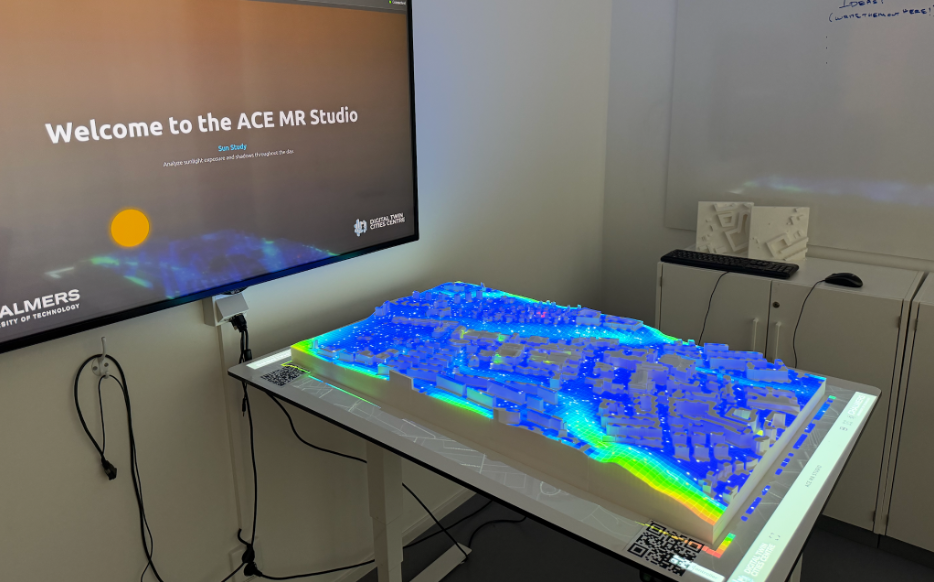
Arvid works on the development of the ACE Mixed Reality Studio, a platform that uses physical models and digital projection to support collaborative urban planning.
Why did you decide to take on a role as a student assistant?
Arvid: “After an internship year before starting my Master’s, I felt motivated to continue working alongside my studies. I heard about the opportunity to join Sustainable Built Environments and it sounded like a good fit.”
How has the experience been so far?
Arvid: “Here I get to be part of some really interesting research projects and work with some very talented people. It’s also easy to combine with my studies since it’s located in the same building and the hours are flexible.”
What does your day-to-day work on the project involve?
Arvid: “I have mainly been working on a 3D-printed model of the Chalmers campus for the ACE Mixed Reality studio, together with an automated workflow for generating similar models of any location.”
How is this physical model utilised by the research group?
Arvid: “The physical model is used for presentations, where immersive and interactive data can be projected onto it. We are currently exploring how and in what areas this adds value compared to more traditional ways of presenting similar data.”