
Tag: Material stocks

  • Reflections on Circularity, Design, and Community – A Farewell Interview with David Sindelar

    Reflections on Circularity, Design, and Community – A Farewell Interview with David Sindelar

    As his one-year position as project assistant comes to a close, we caught up with David Sindelar to reflect on his time within the Sustainable Built Environments (SBE) research area. From working on international projects to exploring circularity in building design, David shares his experiences, challenges, and ideas for what lies ahead.

    How has your time at SBE been so far? Any reflections or standout memories?

    My one year as a project assistant here at SBE has been an incredible time! I’ve had the oppurtunity to meet amazing new colleagues, now friends, and I am sad to see this chapter come to an end so soon. I have truly enjoyed our morning coffee rituals, engaging lunch discussions and the many after-work excursions.

    You started off working primarily with the CREATE project. What were some of the highlights of that experience for you?

    A personal highlight for me was to be part of such an extensive and international project, covering a variety of topics within the theme of circular economy and sustainable building practices, an experience that was not just inspiring but also eye-opening.
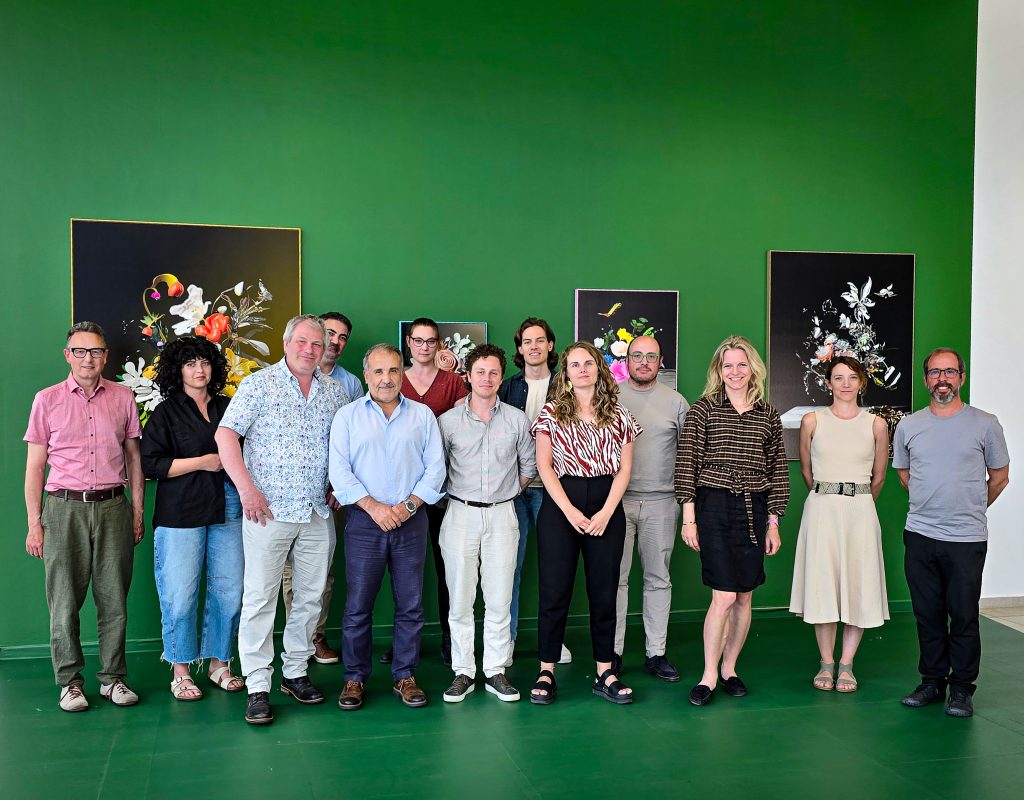
    David with the CREATE team at the final project meeting.

    What was the most challenging part of the project?

    Covering such a vast array of research areas, from stock modelling to governance policy to life cycle assessment, it was at times challenging to understand how each part informed the other. However, in the end it was impressive to see how naturally these research areas complemented and enriched each other.

    Beyond CREATE, you’ve been part of several other projects and collaborations during your time here. Could you tell us a bit about those?

    Apart from the CREATE project, I worked on developing building archetypes for material stock modelling and supported the work in both the Ecom4Future and DT4PED projects where I helped create material databases for different energy and renovation scenarios.

    What new skills or ways of thinking have you developed at SBE?

    For sure! My understanding of reuse potential of buildings at an urban scale has greatly increased during my time in the CREATE project, along with my analytical skills within research, having gathered data from various sources and looking at how they can inform larger and more complex questions regarding circularity.

    You were originally trained as an architect. Did that background give you a different perspective in your work?

    Definitely, especially in my work with other PhD students developing archetypes for both residential and non-residential buildings where knowledge of building trends in Sweden as well as having an understanding of different building structures came in good use.

    Are there any topics or questions from your time here that you want to explore further in the future?

    Yes, the topic of reuse within architectural practice is something that I would very much like to learn more about in my future work, especially in a more zoomed-in context, focusing on how to practically implement it through innovative designs.

    Looking ahead, what kinds of roles or opportunities are you hoping to explore after SBE?

    While I’m aiming for a role as a practicing architect, my experience collaborating with PhD students in SBE and engaging with their research has made me very interested in pursuing a future in research within the field of architecture as well.

    Any final words of advice for current or future members of the SBE research area?

    For current members of the SBE research area I would simply like to thank them for creating such a warm and welcoming environment, it truly has been a great time working together. And for future members, I can say with confidence that they have a great team of researchers and colleagues to look forward working with.

    We thank David for his contributions to the SBE research area and wish him all the best in his next steps—whether in practice, research, or a creative combination of both!

  • Smashing Boundaries – How Sara & David Are Rethinking Energy and Materials

    Smashing Boundaries – How Sara & David Are Rethinking Energy and Materials

    This week, we sat down with Sara Abouebeid and David Sindelar, two of our project assistants in the Sustainable Built Environments research group, to learn more about their work, research experiences, and perspectives on sustainability. From energy resilience to material stock mapping, Sara and David share their insights on the projects they are contributing to and what excites them about their research.

    Sara

    What inspired you to join the Sustainable Built Environments research group at Chalmers University?

    I have been following the work of the SBE group for some time and have always been interested in their research. Before joining, I worked across different scales and domains, which helped me develop a broad perspective on sustainability. When the opportunity to join SBE arose, it felt like a natural next step in my journey.

    Could you tell us about the projects you are currently working on and their potential impact?

    I am involved in two projects: Digital Twin for Positive Energy Districts (DT4PED) and Energy Communities for the Future (ECOM4Future). These projects explore ways to enhance energy resilience and decentralise energy systems in existing districts through a multi-disciplinary approach. We aim to optimise the energy performance of existing buildings, develop strategies for energy flexibility, and maximise local renewable energy generation.

    How has this experience shaped your skills, and what are you hoping to develop further?

    I previously worked on energy modelling at the building scale, but these projects have given me the opportunity to expand my focus to the district level. Working alongside electrical engineers, mathematicians, cloud architects, and developers has helped me integrate new methodologies into my models. Moving forward, I would like to strengthen my project management skills to contribute more effectively to research coordination.

    What excites you most about the DT4PED project?

    DT4PED is particularly exciting because it serves as a blueprint for sustainable energy transitions in Sweden. It’s rooted in a real-world case with engaged stakeholders, and I can see how my research contributes to tangible change. I’m also looking forward to publishing three research papers based on our recent findings.

    When you’re not working on research, how do you like to spend your time?

    Lately, I’ve taken up badminton and try to play once or twice a week—it’s great to have colleagues who share the same interest! On quieter days, I enjoy punch needling, especially when it’s grey outside. I also love hiking with my dog, Pucci, and I’m actively involved in Amplify Voices, a non-profit organisation that supports women from foreign backgrounds in Sweden by providing a platform to share their stories and experiences.

    David

    What drew you to the Sustainable Built Environments research group at Chalmers University?

    With a background in architecture and adaptive reuse, I wanted to explore sustainability in greater depth and see how it can be applied to contemporary building practices. Joining the SBE research group has given me the opportunity to contribute to this field in a meaningful way.

    Could you describe the project you are currently working on and its significance?

    I am working on developing non-residential building archetypes to map the material stock in Gothenburg’s built environment. This research is part of a broader project aimed at establishing a tool for city planners to identify building materials as a second-hand resource, supporting more sustainable construction practices.

    How has this role helped you grow, and what do you hope to gain from it?

    This experience has challenged me to think more creatively when solving problems and has provided valuable insight into conducting research at a high level. I’ve gained a better understanding of how sustainability and resource efficiency can be integrated into urban planning.

    What excites you most about sustainable design and infrastructure?

    For me, the most exciting aspect is the transdisciplinary nature of sustainable design. It requires thinking beyond traditional boundaries to develop solutions that address multiple complex challenges simultaneously. This kind of collaboration is both stimulating and essential for creating impactful change.

    What are some hobbies or activities you enjoy outside of research?

    Outside of work, I am an avid badminton player and a keen bird watcher—mainly for the drama! I also enjoy spending time in the wood workshop, where I experiment with different projects (with varying degrees of success!).

    We are delighted to have Sara and David as part of our team and look forward to seeing how their research contributes to the future of sustainable built environments. Stay tuned for more updates from our research group!