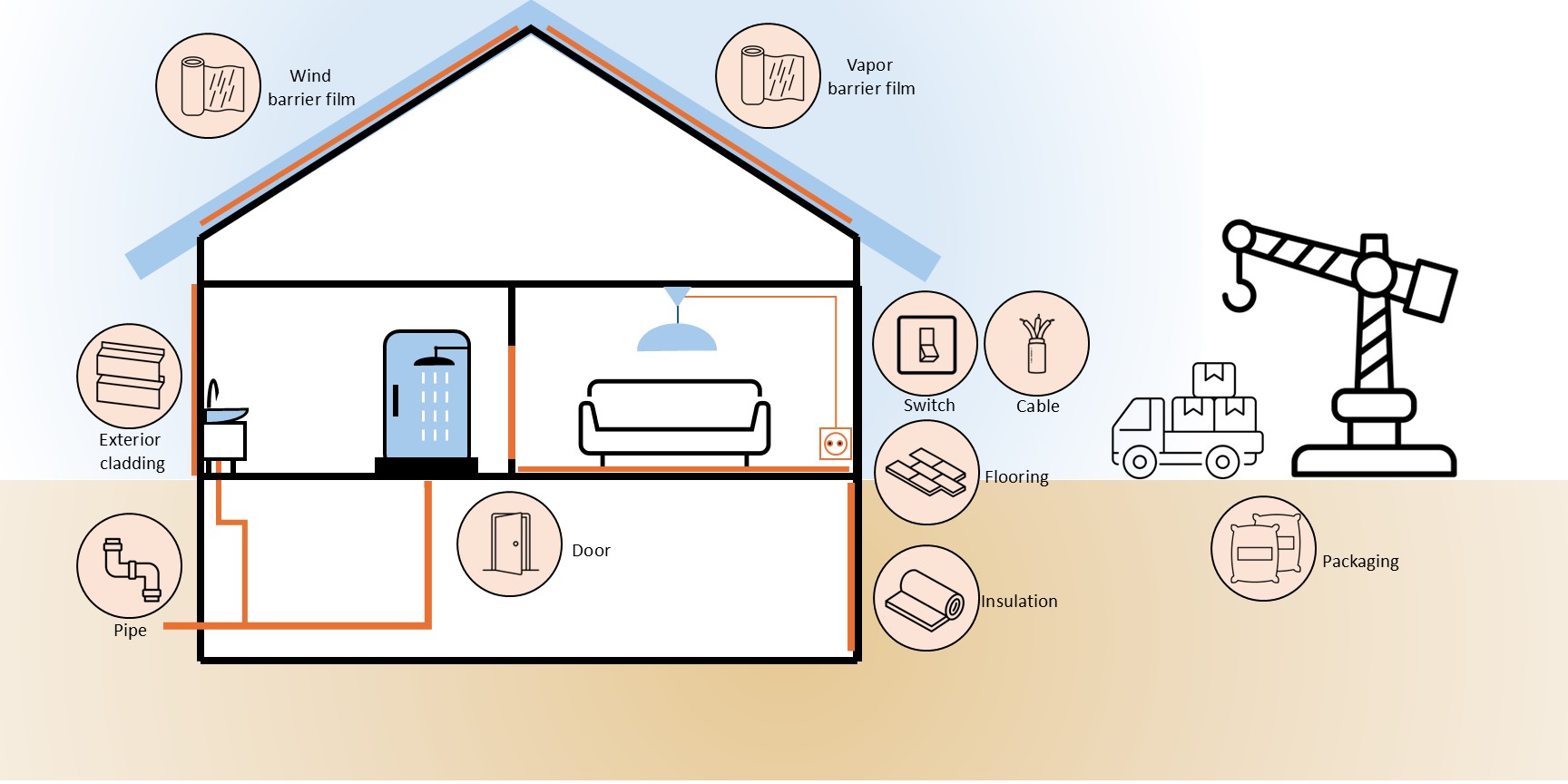
Mapping construction material stocks is essential for understanding socioeconomic metabolism and informing the circular economy. However, spatial material stock studies often produce coarse results owing to challenges in material intensity development. This project develops BUD-MI (Bottom-Up Data: Material Intensity), a material intensity data collection template designed with three core objectives: streamlining the data collection process during building sampling, supporting cumulative research while ensuring project-specific relevance, and enhancing the utility of results for the construction industry. BUD-MI aims to assist researchers, students, and construction practitioners in developing material intensity data in line with these three objectives. The development process requires identifying material intensity challenges, eliciting requirements, mapping relevant domain work and creating missing ones, and assembling them all into BUD-MI. BUD-MI supports future material intensity data collection efforts, ensuring data quality, granularity, comparability, transferability, and availability, thereby advancing socioeconomic metabolism and circular economy research and practice.
The aim of this project is, within a doctoral research project, to further develop, verify, and test a tool, including indicators and key performance indicators (KPIs), developed as part of a preliminary study. These indicators and KPIs are intended to be used to set requirements and provide incentives in the Swedish Transport Administration’s procurement processes, with the aim of improving surplus material management by making it more circular, both in the planning and design of projects and in their implementation and reporting.
The work has the following sub-objectives:
To further develop the prototype into a functional tool, and to test and prepare it for implementation for reporting on surplus material management in the Swedish Transport Administration’s projects based on specific indicators and KPIs.
To expand the prototype to include socio-economic and sustainability-related indicators and KPIs.
To develop an additional functional tool that addresses indicators and KPIs relevant at the societal level.
To evaluate the socio-economic effects of surplus material management at both the project and societal levels.
To evaluate how requests for tenders can be designed to steer surplus material management in the desired direction.
The project is expected to generate increased knowledge of sustainable and circular surplus material management, encompassing environmental, social, and economic aspects. The resource accounting tool, including indicators and KPIs at the project level, will enable standardized project reporting and consistent follow-up. Together with the expanded tool, the study will contribute to a better understanding of the socio-economic effects of surplus material management and how tendering models can be designed to steer material management in projects in the desired direction.
In construction, supply chains are highly fragmented and project-based, making coordination difficult. Circular business models are being implemented to improve sustainability and increase resilience. These include collecting used products and materials, transporting them, storing them, inspecting their quality, and redistributing them. However, these processes are often costly and logistically complex, particularly when materials originate from multiple locations and projects. Consequently, the implementation of circular business models remains limited.
Understanding how to provide efficient and sustainable transport within circular business models is an important research challenge, particularly in industries where material flows, actor networks, and institutional arrangements are highly interconnected. The aim of this project is to investigate efficient and sustainable transport solutions for circular business models. This collaborative project combines two distinct research fields: supply chain management (Lisa Govik, TME) and circularity in the built environment (Maud Lanau, ACE).
The project will (1) ) contribute to knowledge on the interplay between transport decisions and circular business models, and (2) shed light on balancing efficiency and sustainability in transport within complex supply chains. The project is expected to result in two publications in top-tier journals. It will also provide a foundation for the research team to develop future research ideas and build a consortium with key external stakeholders, who will serve as partners in future applications for external funding. This collaborative initiative will open a new avenue in sustainable transport research, with a particular focus on circular business models in complex and temporary supply chains.
As his one-year position as project assistant comes to a close, we caught up with David Sindelar to reflect on his time within the Sustainable Built Environments (SBE) research area. From working on international projects to exploring circularity in building design, David shares his experiences, challenges, and ideas for what lies ahead.
How has your time at SBE been so far? Any reflections or standout memories?
My one year as a project assistant here at SBE has been an incredible time! I’ve had the oppurtunity to meet amazing new colleagues, now friends, and I am sad to see this chapter come to an end so soon. I have truly enjoyed our morning coffee rituals, engaging lunch discussions and the many after-work excursions.
You started off working primarily with the CREATE project. What were some of the highlights of that experience for you?
A personal highlight for me was to be part of such an extensive and international project, covering a variety of topics within the theme of circular economy and sustainable building practices, an experience that was not just inspiring but also eye-opening.
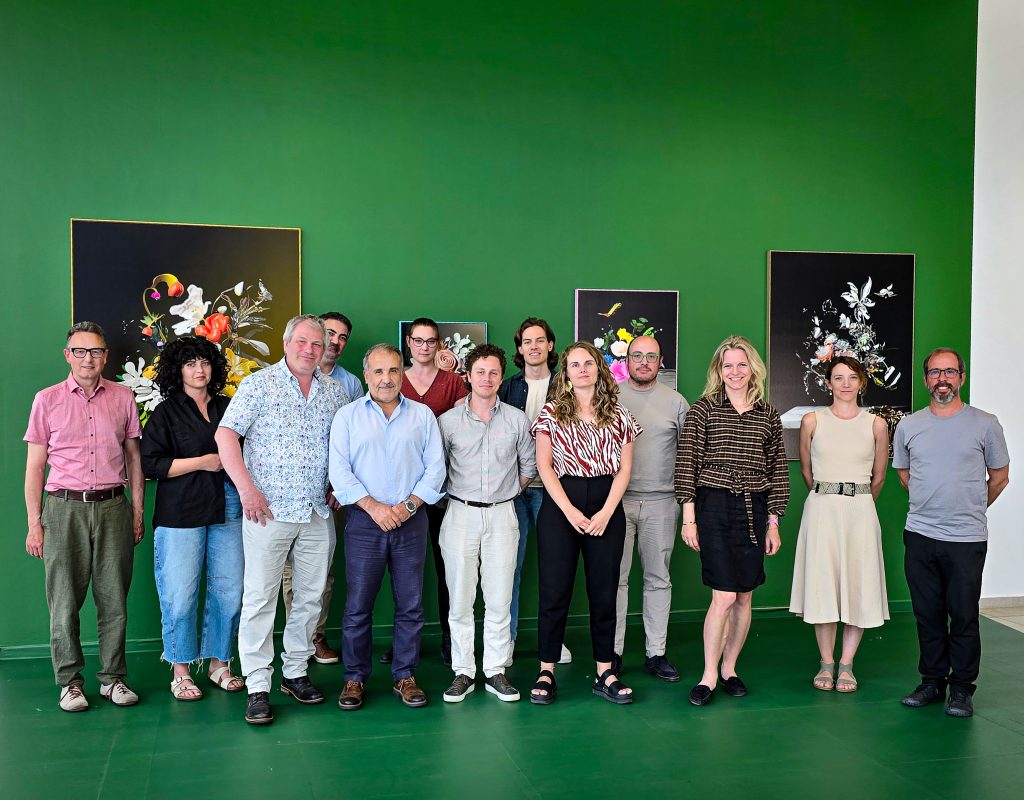
David with the CREATE team at the final project meeting.
What was the most challenging part of the project?
Covering such a vast array of research areas, from stock modelling to governance policy to life cycle assessment, it was at times challenging to understand how each part informed the other. However, in the end it was impressive to see how naturally these research areas complemented and enriched each other.
Beyond CREATE, you’ve been part of several other projects and collaborations during your time here. Could you tell us a bit about those?
Apart from the CREATE project, I worked on developing building archetypes for material stock modelling and supported the work in both the Ecom4Future and DT4PED projects where I helped create material databases for different energy and renovation scenarios.
What new skills or ways of thinking have you developed at SBE?
For sure! My understanding of reuse potential of buildings at an urban scale has greatly increased during my time in the CREATE project, along with my analytical skills within research, having gathered data from various sources and looking at how they can inform larger and more complex questions regarding circularity.
You were originally trained as an architect. Did that background give you a different perspective in your work?
Definitely, especially in my work with other PhD students developing archetypes for both residential and non-residential buildings where knowledge of building trends in Sweden as well as having an understanding of different building structures came in good use.
Are there any topics or questions from your time here that you want to explore further in the future?
Yes, the topic of reuse within architectural practice is something that I would very much like to learn more about in my future work, especially in a more zoomed-in context, focusing on how to practically implement it through innovative designs.
Looking ahead, what kinds of roles or opportunities are you hoping to explore after SBE?
While I’m aiming for a role as a practicing architect, my experience collaborating with PhD students in SBE and engaging with their research has made me very interested in pursuing a future in research within the field of architecture as well.
Any final words of advice for current or future members of the SBE research area?
For current members of the SBE research area I would simply like to thank them for creating such a warm and welcoming environment, it truly has been a great time working together. And for future members, I can say with confidence that they have a great team of researchers and colleagues to look forward working with.
We thank David for his contributions to the SBE research area and wish him all the best in his next steps—whether in practice, research, or a creative combination of both!
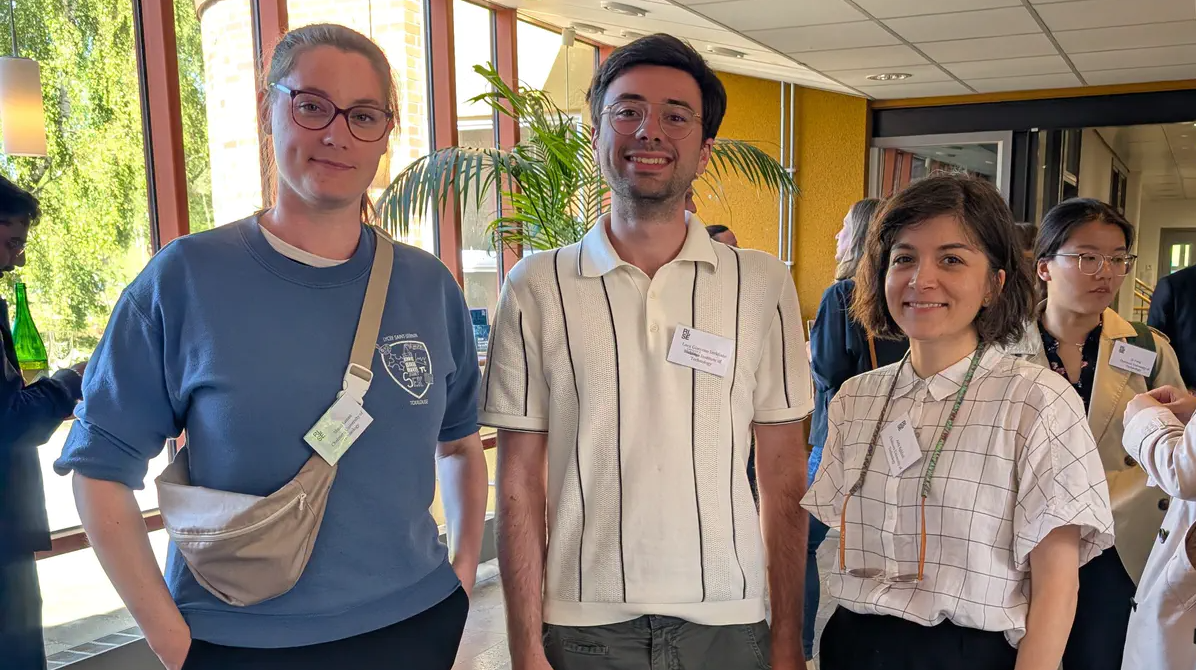
Last week, a few of us attended the third Swedish Circular Economy colloquium that took place in Gothenburg. It was great to see more people coming from different industries and backgrounds, all focused on the same idea. That made starting conversations really easy, and we got to catch up with some colleagues.
Among other highlights from our team: Maud Lanau led a breakout session on circularity in the built environment, and both Luca Giacomo Invidiato and Aida Eghbali connected with other researchers, opening the door for potential future collaborations!
Thanks to all the organizers, speakers, and attendees for making it such a great day!
This week, we had the pleasure of speaking with Maud Lanau, a fellow SBE researcher whose work is shaping the future of sustainable built environments. Maud’s work at the intersection of industrial ecology and circular economy aims to reduce the environmental impact of buildings and infrastructure by focusing on material stocks, flows, and the life cycle of construction materials. In this conversation, Maud shares insights into her current projects, including her innovative work on material stock modeling and the transition to circular construction practices. She also discusses how her research is addressing global sustainability challenges and gives us a glimpse into her passion for teaching and personal interests outside of academia.
Thank you for sitting down with us Maud! Can you tell us a bit about your core research focus and what drives your work in the sustainable built environment
In my research, I want to understand how to reduce environmental impacts caused by the development of the built environment. I use industrial ecology paradigms to do that, specifically socioeconomic metabolism and circular economy. Those are powerful in capturing the much-needed systems perspective required to address sustainability issues.
My ‘day-to-day’ research focuses on material stock and flow modeling, as well as the entire research pipeline surrounding it. For example, upstream of the pipeline, I work on identifying and gathering the necessary data for material stock modeling—figuring out what data exists, where to find it, how to obtain it, and evaluating its quality. The core of the pipeline is the modeling itself, where I focus on improving accuracy and granularity to create resource cadasters with valuable insights. On the downstream side, I explore how the results of these models, such as material resource cadasters, can help guide the transition toward more sustainable built environments.
Could you share more about the projects you are working with?
I lead a few projects under what I would call the ‘Material Stock umbrella’. This includes “NUMMS”– Exploring the Nexus between Urban Morphology and Material Stocks, in which I supervise Xin Bian whose PhD is about bridging the two research strands of material stock and urban morphology. In “Future URCs”, I supervise Luca G. Invidiato who bridges the research strands of material stock and construction management. He uses material stock results to investigate the logistical and environmental implications of a wide-scale circularization of the construction industry. I’m also finalizing my side-project “BUD-MI”, in which I developed a template to facilitate material intensity data collection.
Project image: Future Urban Resource Centers
Then, there are several projects in which I am involved. In “CREATE” (on which you communicated recently), I work with project assistants to generate and structure material stock data that support the information needs of construction practitioners. There is also the PhD project of Aaron Qiyu Liu, who works on embodied carbon and material stocks of the built environment of Sweden and focuses on methodological advancements in stock and flow modeling. And finally, I co-supervise two PhD students on topics related to construction circularity: Shuang Wang is working with construction plastics circularity, and Lucija Prsa Gazilj is working with sustainable mass handling INDIMASS.
And… that’s it 😊
Your research clearly addresses some big global sustainability challenges. How do you see your work helping scale up sustainable building solutions, especially in rapidly urbanising areas?
I believe the type of research I do is particularly valuable in addressing this issue. The concept of the “material stock-flow-service nexus,” which is part of the broader field of socio-economic metabolism and industrial ecology, plays a key role here. In essence, this nexus highlights that to provide services, we need both material stocks and the associated material and energy flows. For example, to provide transportation services, we require not only the flows of resources (e.g., fuel) but also the material stocks (e.g., infrastructure and vehicles) that support the system.
Currently, we have a good understanding of the material and energy flows that keep a city functioning, as well as the services provided by the built environment. However, what’s often missing is a clear understanding of the materiality of the existing built environment, particularly in terms of its embodied carbon. This is where my research comes in—aiming to provide a more comprehensive view of the sustainability of built environment systems. By better understanding material stocks across cities or even entire countries, we can gain deeper insights into our “socioeconomic metabolism” and, more importantly, the connections between material stocks, material flows, and the services they enable. This, in turn, can help us understand how a city is structured, what works well, and what works less well. These are very important findings that can inform the urban planning of future cities!
Let’s talk about education and teaching: You’ve mentioned teaching and mentoring students—how do you integrate your research into your teaching, and what do you enjoy most about it?
Yes! I’m involved in the master’s program in “Industrial Ecology”. I took the program back in 2014 and it was truly an illumination for me – it motivated me to continue my studies and pursue a career in academia. And now I teach in the program; the circle is complete! I recently developed a new course called “Sustainability Analytics and Visualization.” It’s taught in the second year, so students are already familiar with tools and concepts like LCA, MFA, circular economy, and more. This means that we can go deeper into industrial ecology thinking, focusing on how they can integrate their industrial ecology knowledge with analytics and visualization techniques. This is fun for me as well; after all, I’m an industrial ecologist, and though I focus on the construction sector in my research, teaching this course allows me to engage with industrial ecology concepts more broadly. This helps me keep the big picture in mind: the built environment is part of a wider system, and it is this wider system that we want to become sustainable.
That’s really coming full circle indeed! How about when you’re not working on research, how do you like to spend your time or unwind?
I listen to music a lot – whether at home or at concerts. I used to play music more, but these days it’s hard to find the time. I love going out to restaurants, hanging out with friends, and browsing to secondhand shops and record shops. Recently, I’ve incorporated some more sports into my routine, and I’ve also started spending time at the large park near my place. You see, they have all kinds of animals there, and I can spend an unreasonable amount of time watching animals be animals, wondering what might be going on in their minds!
A big thank you to Maud Lanau for taking the time to share her thoughts and work with us. With her focus on material stocks and how they shape our cities, Maud’s work is making a real difference. We’re excited to see where her projects go and how they’ll continue to influence the way we think about building and urban development.
This week, we sat down with Sara Abouebeid and David Sindelar, two of our project assistants in the Sustainable Built Environments research group, to learn more about their work, research experiences, and perspectives on sustainability. From energy resilience to material stock mapping, Sara and David share their insights on the projects they are contributing to and what excites them about their research.
Sara
What inspired you to join the Sustainable Built Environments research group at Chalmers University?
I have been following the work of the SBE group for some time and have always been interested in their research. Before joining, I worked across different scales and domains, which helped me develop a broad perspective on sustainability. When the opportunity to join SBE arose, it felt like a natural next step in my journey.
Could you tell us about the projects you are currently working on and their potential impact?
I am involved in two projects: Digital Twin for Positive Energy Districts (DT4PED) and Energy Communities for the Future (ECOM4Future). These projects explore ways to enhance energy resilience and decentralise energy systems in existing districts through a multi-disciplinary approach. We aim to optimise the energy performance of existing buildings, develop strategies for energy flexibility, and maximise local renewable energy generation.
How has this experience shaped your skills, and what are you hoping to develop further?
I previously worked on energy modelling at the building scale, but these projects have given me the opportunity to expand my focus to the district level. Working alongside electrical engineers, mathematicians, cloud architects, and developers has helped me integrate new methodologies into my models. Moving forward, I would like to strengthen my project management skills to contribute more effectively to research coordination.
What excites you most about the DT4PED project?
DT4PED is particularly exciting because it serves as a blueprint for sustainable energy transitions in Sweden. It’s rooted in a real-world case with engaged stakeholders, and I can see how my research contributes to tangible change. I’m also looking forward to publishing three research papers based on our recent findings.
When you’re not working on research, how do you like to spend your time?
Lately, I’ve taken up badminton and try to play once or twice a week—it’s great to have colleagues who share the same interest! On quieter days, I enjoy punch needling, especially when it’s grey outside. I also love hiking with my dog, Pucci, and I’m actively involved in Amplify Voices, a non-profit organisation that supports women from foreign backgrounds in Sweden by providing a platform to share their stories and experiences.
David
What drew you to the Sustainable Built Environments research group at Chalmers University?
With a background in architecture and adaptive reuse, I wanted to explore sustainability in greater depth and see how it can be applied to contemporary building practices. Joining the SBE research group has given me the opportunity to contribute to this field in a meaningful way.
Could you describe the project you are currently working on and its significance?
I am working on developing non-residential building archetypes to map the material stock in Gothenburg’s built environment. This research is part of a broader project aimed at establishing a tool for city planners to identify building materials as a second-hand resource, supporting more sustainable construction practices.
How has this role helped you grow, and what do you hope to gain from it?
This experience has challenged me to think more creatively when solving problems and has provided valuable insight into conducting research at a high level. I’ve gained a better understanding of how sustainability and resource efficiency can be integrated into urban planning.
What excites you most about sustainable design and infrastructure?
For me, the most exciting aspect is the transdisciplinary nature of sustainable design. It requires thinking beyond traditional boundaries to develop solutions that address multiple complex challenges simultaneously. This kind of collaboration is both stimulating and essential for creating impactful change.
What are some hobbies or activities you enjoy outside of research?
Outside of work, I am an avid badminton player and a keen bird watcher—mainly for the drama! I also enjoy spending time in the wood workshop, where I experiment with different projects (with varying degrees of success!).
We are delighted to have Sara and David as part of our team and look forward to seeing how their research contributes to the future of sustainable built environments. Stay tuned for more updates from our research group!
Congratulations to Shuang Wang on successfully defending her Licentiate thesis titled: “Characterizing the construction sector’s potential as secondary plastic provider.” Her research focuses on the circularity of plastics in the construction sector, a critical area for sustainability in the built environment. We sat down with Shuang to ask some questions after the licentiate defence. In this interview, Shuang shares her experience of the defense, key insights from her research, and her aspirations for the next stage of her PhD.
Congratulations, Shuang! How does it feel to have defended your Licentiate?
Thank you. First of all, I feel relaxed as I don’t have any other deadlines so far. I also feel that I gained energy for the coming year as I finally got positive feedback. PhD study is difficult as it usually takes a long time to see the feedback of what you have done, like publishing a paper can take even one year. Always making efforts without getting positive or tangible feedback is a terrible experience, at least for me. So I feel happy that I prepared for the defence and got the Licentiate degree within four months.
Reflecting on your Licentiate, what were the most important insights from your research so far?
My aim and scope became clearer. At the beginning of PhD, I was quite ambitious, wanting to cover everything. Now I narrow down my scope, but in a good way. That is to say I know the focus and understand the extra parts that can be uncovered by my research. With these in mind, I have a better plan for the rest of my PhD project.
What has your time at Chalmers been like so far?
It has been quite peaceful. I have some teaching tasks but I can concentrate on my own research most of the time. The only pity I have is that I feel like I work alone too much and do not have enough interactions, connections, and communications with other researchers at Chalmers.
What are your next steps as you move toward the second half of your research?
My next steps are to conduct more case studies, quantifying plastic materials flows of different buildings. Also, I will do site observation and interviews, getting insights from the industry.
Now that you have reached this milestone, will you take some time off – what would you like to do?
Of course, I have to and I think I deserve it, haha. I cannot take vacation immediately as I have teaching tasks. But I will take one month vacation in March, going back home and spending time with my parents and grandparents.
Once again, congratulations to Shuang Wang on this significant achievement! Her work on construction plastic circularity holds great potential for sustainability, and we look forward to following her continued research. We wish her the best in her upcoming projects and hope she enjoys a well-deserved break before diving into the next phase of her PhD.